Source SMD 2835 LED Bars for Light Boxes, Hotels, and Malls
Compare 30 SMD 2835 LED Bars from verified suppliers in China. These constant current strips feature IP20 ratings and are designed for 8-30cm depth light boxes in hotels, malls, and villas.
Key considerations
Products List
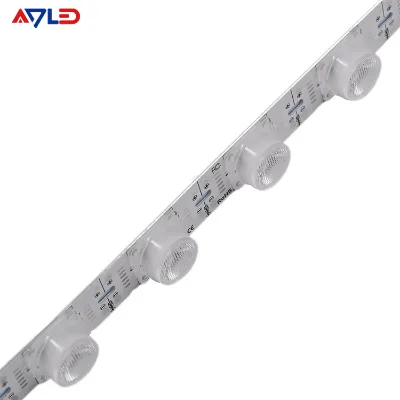


12V SMD 2835 12LEDs/M LED Strip Rigids Lights Bar for Slim Lighting Box LED Bar
$0.69 - $0.79
MOQ: 100 Pieces


Double-Sided Edge-Lit LED Light Bar with SMD3535 Chips, 14W 24V, for Light Boxes
$2.98 - $3.98
MOQ: 100 Pieces





Comprehensive Sourcing Guide
SMD 2835 LED Bars Sourcing Guide
Sourcing SMD 2835 LED Bars requires a disciplined approach to distinguishing between high-density linear solutions and standard side-lit bar configurations. The market offers distinct product families, ranging from high-brightness strips designed for internal light boxes to specialized units with specific beam angles like 15x45 degrees. Buyers must carefully evaluate the physical dimensions and LED density, as observed listings show variations such as 18 LEDs per meter versus 120 LEDs per meter, which directly impact the luminous output and heat dissipation requirements for the final application.
Procurement decisions should be grounded in the specific depth constraints of the lighting fixtures being manufactured. Data indicates that certain SMD 2835 bars are optimized for applications with internal depths between 8 and 25 centimeters, while other variants are engineered for thinner profiles ranging from 3 to 20 centimeters. Understanding these dimensional constraints is critical before engaging with suppliers, as a mismatch between the bar's physical profile and the light box depth can result in uneven light distribution or installation failures.
Product Scope and Observed Listing Signals
The product landscape for SMD 2835 LED Bars includes diverse configurations in terms of shape, material, and mounting features. Listings frequently describe these units as rectangular strips constructed from aluminum and plastic, often featuring a constant current driven mode to ensure stable performance. Buyers should note that some products are available with specific beam angles, such as 116 degrees for general illumination or 15x45 degrees for precise side-lighting, and come with customization options like OEM/ODM acceptance to meet unique design requirements.
Commercial signals in the market reveal a wide range of selling units and packaging standards that influence logistics planning. While some items are sold as single units with a gross weight of 2.5 kg, others are supplied in rolls with standard lengths of 50 or 100 meters, or customized lengths. The observed price range spans from $0.10 to $61, reflecting differences in LED quantity, power consumption, and certification levels. Buyers must verify the specific model number, such as ADS-N3030-18W-LE or Z7008FA-J, to ensure they are comparing equivalent technical specifications rather than disparate product categories.
Technical Specifications to Verify
Voltage compatibility and power input are the first technical parameters that require rigorous verification to prevent system failure. While some SMD 2835 bars operate on DC 12V or 24V, other listings indicate compatibility with 220V input or specific voltage ranges like 11-15W power ratings. It is essential to confirm the driven mode, as constant current drivers are standard for maintaining consistent brightness, and to ensure the input voltage matches the power supply unit available in the target market to avoid the need for additional conversion hardware.
Physical dimensions and LED density dictate the thermal management and optical performance of the final assembly. Buyers must check the PCB width, which can vary between 8mm and 11mm, and the total LED quantity per meter, which ranges from 12 to 120 chips depending on the model. The emitting color temperature, typically available in 3000K, 4000K, or 6500K, and the Color Rendering Index (CRI) of 80 are critical for achieving the desired visual effect in applications like hotels, malls, and villas. Additionally, features such as cuttable lengths, often every 10cm, and the presence of back adhesive should be confirmed to ensure ease of installation.
Compliance and Safety Documentation
Certification requirements vary significantly by region and application, necessitating a thorough review of the supplier's documentation. Observed product listings include a broad spectrum of certifications such as CE, RoHS, EMC, LVD, CCC, FCC, VDE, SAA, GS, and FDA, while others may list UL or TUV-CE. Procurement teams must verify that the specific batch of SMD 2835 bars intended for their project holds the necessary certifications for the destination market, as the absence of a required standard like VDE for Germany or SAA for Australia can lead to customs delays or legal liabilities.
Safety standards regarding electrical isolation and material safety are equally important for long-term reliability. The IP rating is a key indicator of environmental protection, with some products rated IP20 for indoor use only, while others may offer higher protection levels. Buyers should also examine the warranty terms, which typically range from 2 to 3 years, as this reflects the manufacturer's confidence in the product's durability. Ensuring that the product meets local safety standards for voltage and current handling is essential to mitigate fire risks and ensure the safety of the end-user in commercial and residential settings.
Cost Drivers and Commercial Terms
The cost of SMD 2835 LED Bars is heavily influenced by the LED chip quantity, power rating, and the complexity of the manufacturing process. Products with higher LED densities, such as 120 LEDs per meter, or those with specialized beam angles and higher CRI values, command a premium over standard configurations. Additionally, the inclusion of advanced features like constant current drivers and specific mounting adhesives adds to the unit cost, making it vital for buyers to balance performance needs against budget constraints.
Minimum Order Quantities (MOQ) and customization options play a significant role in the total cost of ownership. Market data shows MOQs ranging from 5 to 1000 units, allowing flexibility for small-scale projects while requiring larger commitments for bulk procurement. Customization services, including OEM branding and tailored dimensions, are often available but may incur additional setup fees or higher per-unit costs. Buyers should negotiate based on the total volume and the specific customization requirements to optimize the commercial terms and ensure a sustainable supply chain relationship.
Supplier Qualification and Quality Control
Supplier qualification should begin with verifying the place of origin and the manufacturing capabilities of the vendor. The supply chain for these products is concentrated in regions like Guangdong and Jiangsu in China, where specialized manufacturers produce a wide variety of LED lighting solutions. Buyers should assess the supplier's ability to provide consistent quality across different batches, as variations in LED chip quality or PCB manufacturing can lead to significant differences in brightness and color consistency.
Quality control processes must be clearly defined to ensure that the delivered products meet the agreed-upon specifications. Suppliers should be able to provide test results and quality assurance protocols that cover critical parameters such as luminous flux, color temperature consistency, and electrical safety. It is advisable to request samples for pre-shipment inspection to verify the physical dimensions, LED quantity, and the effectiveness of the adhesive backing. Establishing a clear quality control framework with the supplier helps mitigate the risk of receiving substandard products that could compromise the integrity of the final lighting installation.
Long-Term Procurement Checks
Sustaining a reliable supply of SMD 2835 LED Bars requires ongoing monitoring of product consistency and supplier performance over time. Buyers should establish a schedule for periodic quality audits to ensure that the manufacturer maintains the same standards for LED chips, PCB materials, and packaging. Regular checks on the warranty claims and return rates can provide valuable insights into the long-term reliability of the product and the supplier's commitment to customer satisfaction.
Future-proofing the procurement strategy involves staying informed about technological advancements and changes in industry standards. As the LED industry evolves, new chip technologies and efficiency standards may emerge, potentially rendering current specifications obsolete. Buyers should maintain open communication with suppliers to anticipate these changes and ensure that their product selection remains competitive and compliant with evolving regulations. By proactively managing these long-term checks, organizations can secure a stable supply chain that supports their lighting projects for years to come.
FAQs
What are the key specifications for the ADLED 3030 side-lit LED bar?
The ADLED 3030 side-lit LED bar features an SMD3030 light source with a beam angle of 15x45 degrees. It measures 990x25x16mm and operates on DC12V or 24V input. The unit contains 18 LEDs per meter and is designed for internal light boxes with a recommended depth of 8-25cm. It offers high brightness and is available in 3000K, 4000K, or 6500K color temperatures.
Which certifications are available for these LED light bars?
Certifications vary by model but commonly include CE, RoHS, EMC, LVD, CCC, FCC, VDE, SAA, GS, and FDA. Some specific models also hold UL and TUV-CE certifications. These documents ensure compliance with international safety and environmental standards for electrical products used in commercial and residential lighting applications.
Can I customize the length and packaging of the LED strips?
Yes, customization is available for both OEM and ODM requirements. The standard packaging is cartons, and rolls are typically available in 50m or 100m lengths, though customized lengths are acceptable. Some models allow cutting every 10cm and include back adhesive for easy installation in various lighting fixtures.
What is the warranty period for the 2835 SMD LED bars?
Warranty periods differ by product model. One specific model offers a 2-year warranty, while another variant provides a 3-year warranty. These warranties cover manufacturing defects and ensure product reliability for applications in hotels, malls, parks, and buildings. Buyers should verify the specific warranty terms for their selected model number.
Where are these LED light bars manufactured?
These products originate from China, specifically from Guangdong and Jiangsu provinces. The manufacturing locations indicate established supply chains for LED components. Buyers can expect consistent quality standards associated with these major Chinese manufacturing hubs for electronic lighting products.
What is the minimum order quantity for these LED bars?
The minimum order quantity ranges from 5 to 1000 units depending on the specific supplier and model. This flexibility allows both small-scale testing and large-volume procurement. Buyers should confirm the exact MOQ with their chosen supplier to ensure alignment with their project requirements and budget constraints.